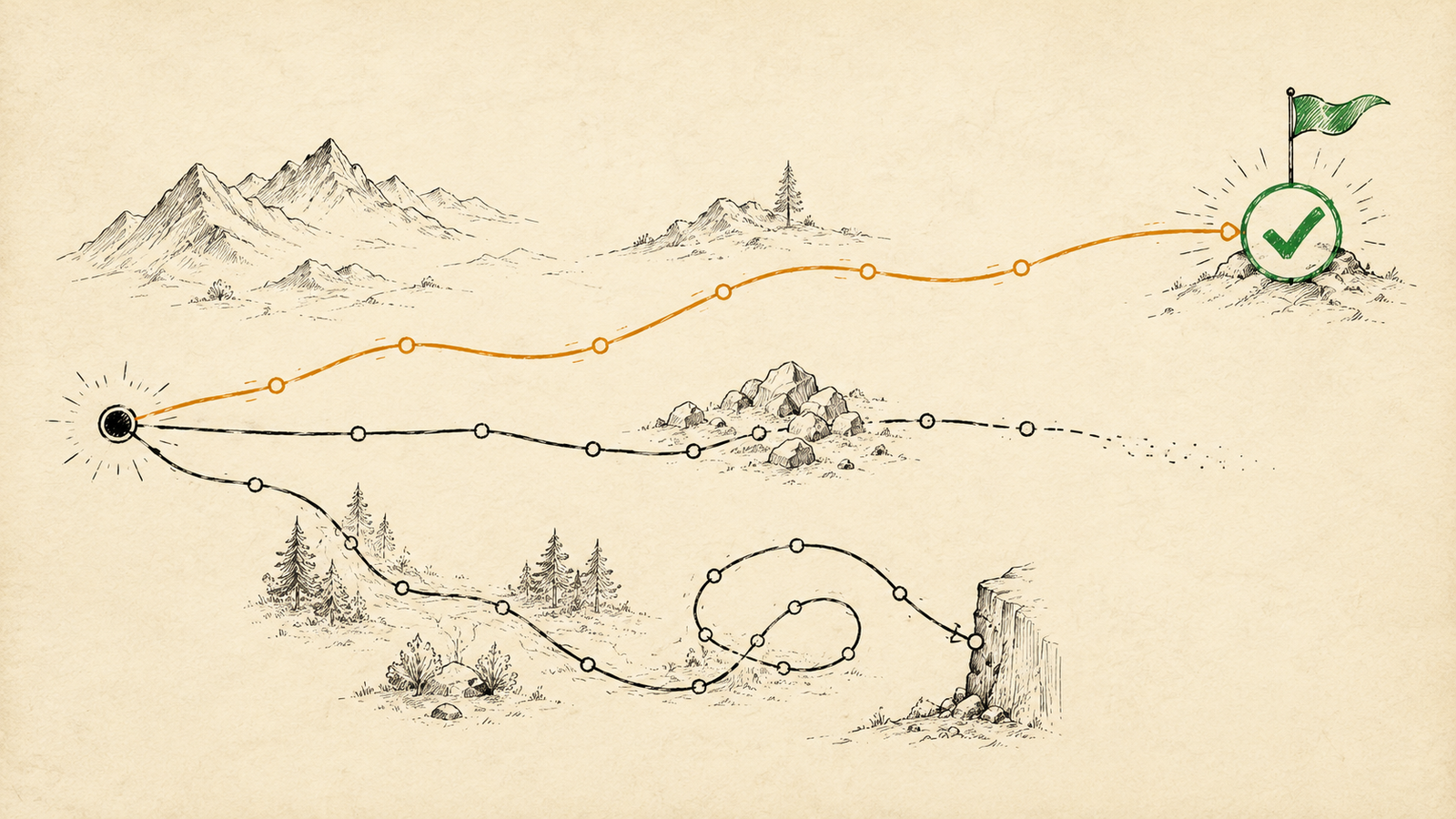
There's no single best way to get AI delivered — only the right fit for your situation — and sometimes the honest answer is to not adopt AI yet at all. Hire in-house when AI is your permanent core and you can wait two quarters to staff it. Use a big consultancy when you need board-level process and brand cover more than a shipped system. Use a specialist agency when you want a governed, owned system live in your stack in weeks. The costly mistake is mismatching the route to the need.
Most "AI agency vs in-house vs consultancy" articles are written by whoever is selling one of the three. This one is written by an agency that will, below, tell you exactly when not to hire us. KORIX founder Shishir Mishra has spent nineteen years building and inheriting software systems, and the pattern across failed AI projects is rarely the model — it's that the delivery route was wrong for the company's actual situation. A team that needed one shipped use case hired three engineers and waited six months. A company that needed deep internal capability outsourced it to a black box. The mismatch, not the technology, is what burned the budget.
This guide compares the three routes on the four things buyers actually decide on — cost, time-to-value, ownership, and ongoing risk — with real numbers, the honest downside of each, and a plain answer to "which one is right for me." By the end you'll be able to place your own situation on the map, including the cases where the right answer is "not KORIX."
The three routes to AI — and what each one actually sells
KORIX defines the AI delivery decision as a choice between three products, not three vendors: in-house teams sell permanent capability, big consultancies sell strategy and cover, and specialist agencies sell a shipped, owned system. Confusing the three is why so many AI budgets disappear — you cannot buy a fast production system from a route that sells two-quarter capability-building, and you cannot buy permanent internal muscle from a route that sells a finished deliverable.
The context that makes this decision urgent is the gap between adoption and deployment. Stanford's 2025 AI Index found that 78% of organizations used AI in 2024. Yet MIT's NANDA initiative found only about 5% of custom enterprise AI pilots reach production with meaningful value. And Gartner's estimate of generative-AI projects abandoned after proof-of-concept rose from at least 30% to at least 50% by the end of 2025. Adoption is universal; deployment is rare. The route you choose is the single biggest lever on which side of that line you land — a point we unpack in our breakdown of why AI projects fail.
Option 1 — Hire in-house: permanent capability, two-quarter ramp
Building an internal AI team is the right move when AI is a core, permanent part of what you do — not a project but a muscle you'll use for years. The upside is real: full control, deep context, and people who live inside your business every day.
The honest cost. A senior AI/ML engineer in 2026 is a 3–6 month search followed by $150,000–$250,000+ in total annual compensation — before they have shipped anything. You're also hiring into a thin market; McKinsey's State of AI research has repeatedly documented how scarce production-grade AI talent remains. Then there's the hidden tax: one engineer isn't a team, ramp time is real, and if the person leaves, the capability leaves with them. In-house is the highest-ceiling, slowest-to-first-output route — and it only pays back if you have enough sustained AI work to keep that team busy.
Option 2 — Big consultancy: strategy, process, and cover
Accenture, Deloitte, McKinsey and their peers sell something genuinely valuable to large organizations: a defensible process, board-level change management, and the brand cover that lets a CIO say "we engaged a top-tier firm." For a regulated enterprise running a transformation across thousands of people, that is not a vanity purchase — it's risk management.
The honest cost. That cover comes through a multi-month discovery phase and large blended teams, with engagements that commonly run into six and seven figures. The trade-off most buyers underestimate is speed and ownership: first shipped value typically lands months in, and what gets built is often tied to the firm's own platforms, frameworks, or an ongoing retainer. You're buying process and certainty, not a fast, independently-owned system. We compare the deployment-vs-strategy split in detail in our AI consultancy vs AI deployment buyer's guide.
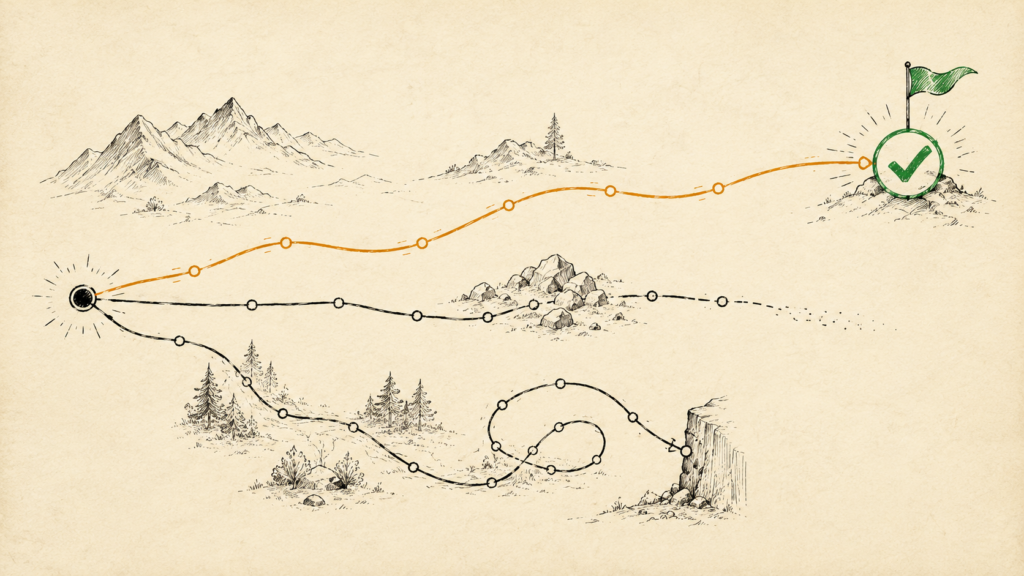
Option 3 — Specialist AI agency: a shipped, owned system, fast
A specialist agency sells the thing the other two routes treat as a by-product: a working, governed system in production, owned by you. The model is narrow on purpose — one real use case, built inside the software your team already uses, on a fixed short timeline, with the code and documentation handed over at the end.
The honest cost — in writing. A KORIX engagement typically runs $15,000–$40,000 for a defined production system, and the pilot path is 21 days to a live use case. Naming that number is deliberate: it's the figure most agencies and consultancies won't put in writing, and our whole Bring Your Own Software (BYOS) approach exists to remove the two things that kill speed and ownership — new-platform migration and bolted-on governance. The honest limit of this route is the flip side of its strength: an agency builds you a system, not a standing team. When the build is done, you own it, but you don't get three full-time engineers in the building. If you need that, you need to hire — which is exactly why many clients use an agency first and hire in-house later, around a system that already works.
AI agency vs in-house vs big consultancy: the comparison
Same goal — AI doing real work — three different products. Here is how they line up on what buyers actually decide on.
| In-house hire | Big consultancy | Specialist agency (KORIX) | |
|---|---|---|---|
| What you're buying | Permanent capability | Strategy, process, cover | A shipped, owned system |
| Time to first production value | Slowest — hire, then build | Months — discovery first | 21 days to a live use case |
| Cost (order of magnitude) | $150K–$250K+/yr per senior hire | Six to seven figures / program | $15K–$40K per engagement |
| Ownership at the end | Full — it's your staff & code | Varies; often platform/retainer-tied | You own code, models & docs |
| Governance & data | Yours to design | Robust, process-heavy | Governed from day one, data stays put |
| Best for | AI as permanent core | Enterprise-wide change + cover | One real system, live fast, owned |
Want a Realistic Plan for Your Project?
No sales pitch. We will give you an honest read on what your situation actually needs, what it should cost, and whether AI is even the right tool here.
Book a Discovery Call →How to choose: place your own situation on the map
Forget the vendor pitches and answer four questions about your situation. One: how permanent is the need? If AI is core to your product for years, lean in-house. If you need a specific outcome, lean agency. Two: how fast do you need a working system? Weeks points to an agency; "we have time to do this properly across the org" points to a consultancy or in-house. Three: who needs to be convinced? If a board or regulator needs big-brand cover, a consultancy earns its fee; if you just need the thing to work, it doesn't. Four: do you have a software stack worth building on? If yes, an agency can build inside it immediately; if you're pre-systems, you need foundations before any agent. Your answers, not the salesperson's, decide the route.
The receipts: what the agency route looks like when it works
We hold ourselves to the production bar all three routes are judged against. Four of KORIX's last four projects reached production. Proteinverse — a 5-star Clutch engagement with founder Lucky Valecha — cut order-to-shipment time from 15–20 minutes to under 90 seconds and launched at a 91/100 mobile Lighthouse score; the full story is in the Proteinverse case study. Numerology Matrix, a 5-star Clutch project for Anna Mazurowska, was live in production by day 18. A B2B lead-intelligence pilot shipped by day 21. And KORIX Brain — the governed AI operating system we run our own company on — is the dogfood proof. None of that required a standing team or a six-month discovery; it required the right route for a defined outcome. If you're comparing specialist agencies specifically, our honest review of the best AI agent development companies shows how to vet one.
When KORIX is the wrong choice — honestly
Say-what-others-won't time. A specialist agency is the wrong call in four clear cases. If AI is your permanent core product and you need engineers in the building every day, hire in-house — we'll help you scope the first system, but you should own the team. If you need formal big-brand cover for a board or a regulator, a top-tier consultancy buys something we can't. If you don't yet have a software stack worth building on, you need foundations first, not agents — we'll tell you that on the first call rather than sell you a build. And if what you actually want is a cheap monthly subscription, an off-the-shelf SaaS tool is the honest answer; our work is custom build, not a seat license. We'd rather lose a bad-fit project than ship one that should never have started — the same standard we apply to every engagement in our state of AI adoption data.
There's no best route to AI — only the right route for your situation
Hire in-house when AI is your permanent core and you can wait two quarters to staff it. Use a big consultancy when you need political cover and board-level process more than a shipped system. Use a specialist agency when you want a governed, owned system live inside your existing stack in weeks, not a six-month discovery. The expensive mistake is matching the wrong route to your situation — not the route itself.
Choosing an AI partner: the full series
This article is part of our Choosing an AI partner series. The pillar guide covers the whole topic; the others each go deeper on one part.
- Pillar guideHow to evaluate an AI implementation partnerStart here: the proof to ask for, the red flags, and the questions that separate operators from sales decks.
- Best AI implementation partners in the UKPartners working in the UK side by side, and the criteria that actually separate them.
- AI agent development companies reviewedAn honest review on price, code ownership, governance and production record.
- AI consultancy vs AI deploymentTwo different products, and a four-question test for which one you need.
- How to write an AI project RFPThe requirements, questions and scope to include so you can compare vendors fairly.
- Buyer's guide to custom softwareHow to scope the work, brief a partner, and control cost and risk.
- Build vs buy AI agentsBuy the commodity; build only what touches your data or regulated actions.
- Build vs buy softwareA framework for when to build, when to buy, and the real total cost of each.
- Custom AI vs off-the-shelf toolsWhen a packaged product is enough and when you need something built.
Continue learning —
go deeper.
Should I hire an in-house AI team or use an agency?
Hire in-house when AI is a permanent core capability you'll build on for years and you can absorb a 3–6 month senior search plus six-figure ongoing comp before anything ships. Use a specialist agency when you need a specific governed system live in weeks and don't yet have the volume of work to keep a full-time AI team busy. Most companies under ~200 people are better served by an agency first, then hiring in-house once there's a proven, owned system to maintain.
What's the difference between an AI agency and a big consultancy?
A big consultancy (Accenture, Deloitte, McKinsey) sells strategy, process and political cover, typically through a multi-month discovery phase and large blended teams. A specialist AI agency sells a shipped, governed system — built inside your existing software, owned by you, on a fixed short timeline. Consultancies are strong on board-level change management; specialist agencies are strong on getting one real use case into production fast and cheaply by comparison.
How much does each AI delivery route cost in 2026?
A senior in-house AI hire is a 3–6 month search plus $150,000–$250,000+ total annual comp before they ship anything. Big-consultancy engagements commonly run into six and seven figures across a multi-month program. A specialist agency engagement like KORIX typically runs $15,000–$40,000 for a defined, owned production system. The numbers aren't comparable like-for-like — they buy different things — but the order of magnitude matters.
Which route is fastest to a working AI system?
A specialist agency is usually fastest to a single production use case — KORIX ships in a fixed 21-day path. In-house is slowest to first output because you must hire before you build. Big consultancies front-load discovery and governance process, so first shipped value typically lands months in. If speed-to-one-working-thing is the priority, a specialist agency wins; if breadth of organizational change is the priority, a consultancy fits.
When is a specialist AI agency the WRONG choice?
It's the wrong choice if AI is your permanent core product and you need a team in the building every day; if you need formal big-brand cover for a board or regulator; if you don't yet have a software stack worth building on; or if you only want a cheap off-the-shelf subscription rather than a custom build. In those cases, in-house, a consultancy, or a SaaS tool respectively is the honest answer — and a good agency will tell you so.
Who owns the AI system at the end of each engagement?
With an in-house team, you own everything — it's your staff and your code. With a big consultancy, ownership varies and is often tied to their platforms, frameworks or ongoing retainer. With KORIX, you own the code, models and documentation outright, built inside software you already run, so there's no vendor lock-in. Always confirm ownership in writing before signing — 'you own it' in the pitch and the contract are frequently different.