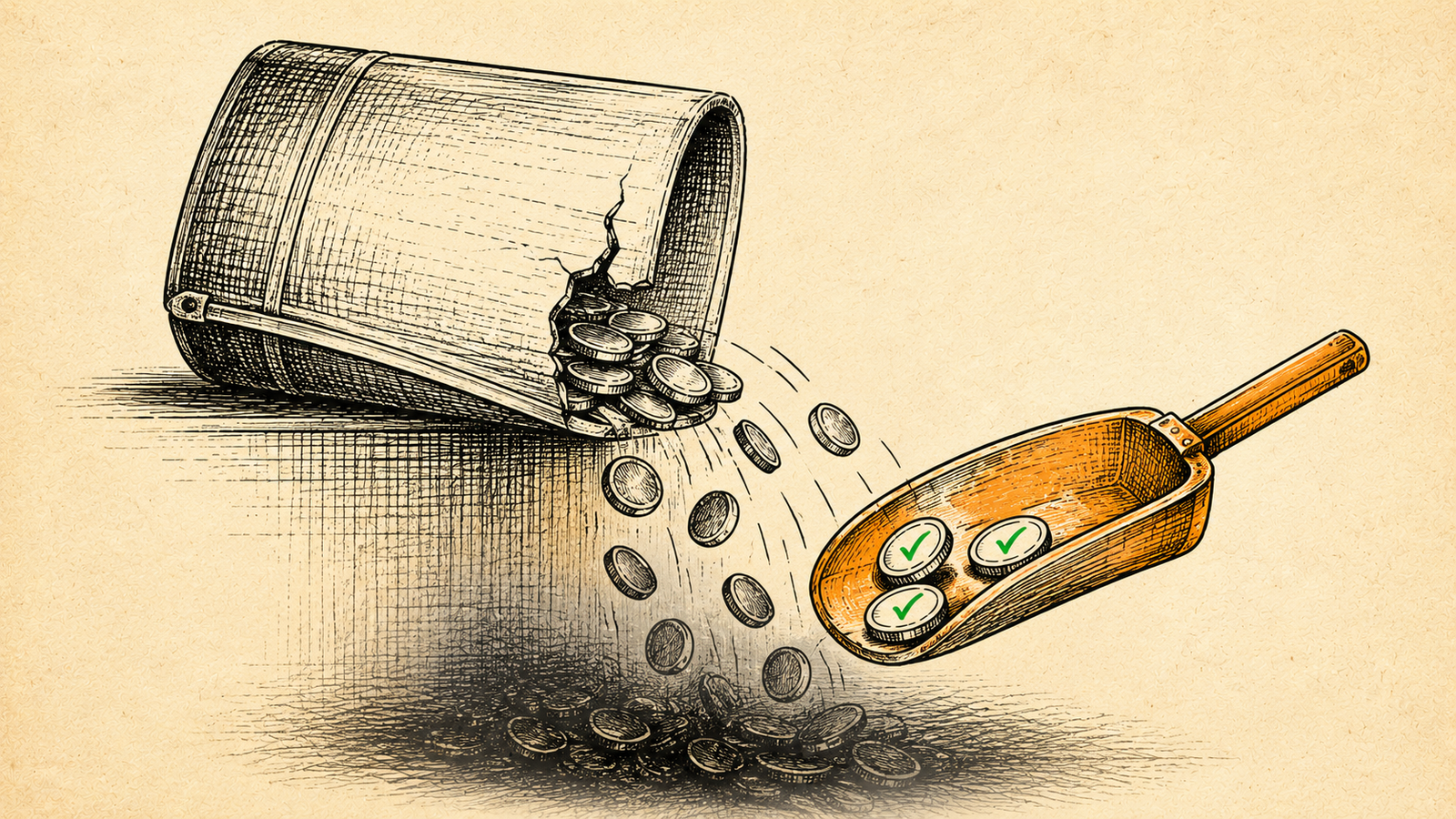
Here's the number most brokers never put on paper: even the best-retaining channel in UK insurance still loses about one policy in seven every year, and a large share of that isn't price, it's renewals nobody chased in time. For a mid-sized broker, three avoidable lapses a month is roughly £5,400 of commission this year and about £34,000 over the client lifetime.
I'm Shishir Mishra, and I keep meeting brokers whose renewal list lives in three people's heads and a spreadsheet. That isn't a system. It's a risk, and it's quietly expensive. According to BIBA, general insurance brokers arrange 94% of all commercial insurance business in the UK, so the whole model runs on renewals holding. Yet when a book grows faster than the admin behind it, non-responders don't get chased in time and policies lapse silently. Nobody decided to lose them; they just fell through the gap between "we'll get to it" and the renewal date.
This article puts a real number on that leakage, shows the three ways brokers actually run the renewal chase, and explains why only one of them is safe under Consumer Duty. The fix isn't another portal or a six-month IT project. A governed Renewal Agent chases renewals and claims status inside the systems you already run, live in 21 days, and you own it. It's making the chase happen every time, with a human on the judgement calls and a full audit trail.
Why renewals lapse (and it usually isn't price)
Retention rarely fails because a client shopped around and found something cheaper. It fails because the renewal conversation never happened. Three facts are worth holding together:
- Brokers are the best-retaining channel and still lose roughly one in seven policies a year. The advised broker channel out-retains direct and price-comparison buying, yet even so a meaningful slice of the book leaves every year. If you keep around 85% of policies, you are losing about one in seven, and most brokers have never counted which of those were winnable.
- Most of that loss is silence, not price. Industry retention analysis is blunt about it: renewals are frequently lost not because of price, but because the firm never had the renewal conversation at all. A timely, proactive contact, before the client has drifted or been re-marketed to, usually keeps them.
- The admin is a second full-time job. Renewal management lives in spreadsheets, calendars and handlers' memory. When volume rises, the people who don't reply on the first attempt are exactly the ones who slip, because chasing a non-responder is precisely the low-urgency task that gets bumped by whatever is on fire today.
None of this is a competence problem. Good handlers chase the renewals in front of them. The leak is structural: there is no reliable mechanism that guarantees every non-responder gets a second and third touch, on time, without someone remembering to make it happen.
What renewal leakage actually costs
Put the maths on a single client. Take a £1,000 average SME commercial premium at roughly 15% commission. That's about £150 of commission per policy per year. A retained client renews for six or seven years, so each avoidable lapse forfeits roughly £900–£1,050 of future commission. Now scale it across a book:
| Avoidable lapses per month | Commission lost this year | Lifetime commission forgone |
|---|---|---|
| 3 | ~£5,400 | ~£34,000 |
| 5 | ~£9,000 | ~£57,000 |
For a broker on around £1m of commissions, that lines up with the high-single-digit "recoverable leakage" many operators cite, tens of thousands a year, most of it from clients who would have stayed if simply contacted in time. And the margin you're protecting is thinner than it looks: BIBA puts the cost of regulation at 5.2% of premiums, so every renewal you keep is defending a number that's already smaller than the headline premium suggests.
Two honest caveats. First, these figures are worked illustrations on typical numbers, not audited averages, the point is the shape of the loss, and you should re-run it on your own premiums, commission rate and tenure. Second, not all of it is recoverable: some clients genuinely leave on price or because they've closed. The recoverable part is the admin-driven silence, and that's the part worth building for.
If you want to pressure-test the arithmetic the way we would for an agent build, our AI implementation cost guide breaks down how to cost a fix against the leak rather than against a software sticker price.
Three ways to run the renewal chase
Most brokers are doing one of these three things. They cost very differently, not in software price, but in leaked commission and compliance risk.
| Cost line | Manual (spreadsheet + memory) | Generic AI tool | Governed AI agent |
|---|---|---|---|
| Chase coverage | Inconsistent, non-responders slip | Partial, unsupervised | Complete, every renewal, every touch |
| Handler time | High | Medium | Low |
| Judgement on complex cases | Human, but stretched | Automated, opaque | Human-in-the-loop by design |
| Audit trail (Consumer Duty) | Patchy | Weak / black-box | Full, traceable |
| Compliance risk | Key-person risk | "The model decided", a red flag | Logged and defensible |
| Time to live | , | Weeks to months | ~2 weeks |
The manual approach isn't wrong. It's just capped by human attention, and it's the non-responders that fall out of the cap. A generic AI tool looks like the upgrade, but it introduces a new problem we'll come to next. The full build-versus-buy reasoning is in our build vs buy AI agents guide; here we're only weighing the renewal chase.
Want a Realistic Plan for Your Project?
No sales pitch. We will give you an honest read on what your situation actually needs, what it should cost, and whether AI is even the right tool here.
Book a Discovery Call →Why a governed agent, not a generic AI tool
The same governed-versus-generic gap shows up in other regulated verticals. See how it plays out for UK letting agents buried in gas, electrical and Right to Rent compliance deadlines.
This is the part where most "AI for brokers" pitches quietly fail. The FCA's approach to AI isn't a new rulebook. It's the existing one, applied. As the FCA's Chief Data, Information and Intelligence Officer Jessica Rusu has put it, firms "are still required to meet their commitments no matter how they choose to deliver their services." "The model decided" is not a defence. Under Consumer Duty you have to show you acted in the customer's interest, which means the renewal conversation, and the record of it, has to exist and be evidenced.
This isn't hypothetical pressure. Deloitte's Consumer Duty benchmarking of the general insurance market found 85% of firms increased governance around customer outcomes. Yet only 41% of brokers added the resource to deliver it, Deloitte found, and that gap between rising expectation and flat capacity is exactly where renewals slip.
So the safe setup isn't a black-box tool that quietly acts on your book. KORIX defines governed renewal chasing as an AI agent that runs every renewal touch inside your existing broking platform, escalates the judgement calls to a human, and logs every action for Consumer Duty. That's a governed agent: it runs the whole renewal chase inside the systems you already use, escalates the judgement calls to a person, and logs every action so the renewal conversation always happens and can be evidenced. A generic tool optimises for "did it send", a governed agent optimises for "can you prove it did the right thing, and did a human decide the close calls." That's retention and Consumer Duty in one move, rather than a retention gain that creates a compliance liability.
Concretely, that means the agent watches the renewal pipeline, contacts non-responders on a reliable cadence, drafts the follow-ups, and hands anything material, a mid-term change, a claim in the period, a client who wants to negotiate, to a handler with the context already assembled. It doesn't replace the broker's judgement; it removes the reason judgement never got applied. And because it sits inside the broker's existing platform (for example Acturis or Applied Epic) rather than on top of it, there's no data migration and no second system for the team to learn. That's what makes ~2 weeks to live realistic, and it's the model behind our 21-day AI Pilot and agent deployment as a service.
Who this isn't for: if your renewal admin is already fully covered, every non-responder chased on time, every touch logged. You don't have a leakage problem and you don't need an agent. Buy nothing. This is for brokers whose book has outgrown the people behind it, where the losses are silent and nobody can currently say how big they are.
How to size your own renewal leakage
A quick framework before you spend anything, the same one we'd walk through in a first call, and the honest way to decide whether a fix is even worth it:
- Count the silent lapses. How many renewals a month currently get no second contact once the client doesn't respond first time? That number, not your headline retention rate, is the leak.
- Put your own commission on it. Average premium × your commission rate × the number of silent lapses, then multiply by typical client tenure for the lifetime figure. Use your numbers, not ours.
- Separate price losses from admin losses. Only the admin-driven lapses are recoverable by chasing better. Be honest about the split; inflating it just wastes your own time.
- Cost the fix against the leak, not against software. If reliable chasing recovers even three renewals a month, compare that to what a fix costs, the leak is almost always the bigger number. If it isn't, don't build.
Run those four lines and you'll have a defensible figure for what unchased renewals are actually costing you, and a clear read on whether governing the chase is worth it, or whether your admin is already tight enough that the honest answer is "leave it alone." Either way, you'll be deciding on numbers instead of a feeling. If you want a second read, our team will size it with you honestly, including telling you if there's nothing here worth fixing. Not sure where your firm sits? Take the 2-minute AI readiness assessment.
Sources and method: broker market share (94% of commercial insurance) and the cost of regulation (5.2% of premiums) draw on BIBA data; the FCA's position on AI accountability under Consumer Duty is set out by the FCA (Jessica Rusu); broker readiness figures come from Deloitte's Consumer Duty analysis; typical UK SME premiums are informed by public market data such as money.co.uk. Commission percentages, handler-hours, client-tenure and lifetime figures are industry estimates and worked illustrations, not audited averages, re-run them with a firm's real numbers before acting.
Most renewal loss isn't price. It's the chase that didn't happen. Fix the chase, not the software.
Even the best-retaining brokers lose about one policy in seven a year, and for a mid-sized firm a handful of unchased renewals a month is tens of thousands in lifetime commission walking out the door. The fix isn't a new portal or a six-month project. It's making the chase happen every time, with a human on the judgement calls and a full audit trail for Consumer Duty. Size your own leakage from real numbers, then fix the chase, not the software.
Continue learning —
go deeper.
How much do UK insurance brokers lose to unchased renewals?
It varies by book, but the pattern is consistent: even the best-retaining channel loses roughly one policy in seven a year, and much of that is admin-driven, not price. For a mid-sized broker, three avoidable lapses a month is about £5,400 of commission this year and around £34,000 over the client lifetime. Firms on ~£1m of commissions often see recoverable leakage in the high-single-digit percent.
Why do insurance renewals lapse?
Usually because the renewal conversation never happened in time, not because a client found a cheaper price. When a book grows faster than the admin behind it, non-responders don't get chased and policies quietly lapse.
Is AI renewal chasing FCA and Consumer Duty compliant?
It can be, if it's governed. The FCA applies its existing rules regardless of how a decision is made, and expects AI-assisted actions to be audit-ready and traceable. A governed agent logs every action and keeps a human on material judgement calls, which is what makes it defensible, unlike an opaque, unsupervised tool.
How long does it take to deploy an AI renewal agent?
A focused, single-workflow deployment runs in about two weeks, not a six-month IT project, because it sits inside the systems you already use rather than replacing them.
Does it work inside Acturis or Applied Epic?
Yes, the point of a governed agent is that it runs inside your existing stack (for example Acturis or Applied Epic), rather than asking you to move your process onto another platform.